Understanding Smoke Points: Choosing the Right Oil for High-Heat Cooking
What is Smoke Point?
Smoke point refers to the temperature at which an oil begins to produce visible smoke when heated. This phenomenon occurs when the fat in the oil starts to break down, resulting in the release of free fatty acids and potentially harmful compounds. The smoke point is a crucial factor to consider in culinary practices, particularly for high-heat cooking methods like frying, sautéing, and roasting.
Why is Smoke Point Important?
A high smoke point is essential for various reasons:
-
Flavor Preservation: Oils that have surpassed their smoke points can impart a burnt or acrid flavor to your food.
-
Nutritional Integrity: Heating oils past their smoke points can degrade beneficial nutrients, such as vitamins A and E, and essential fatty acids.
-
Toxic Compounds: Oils heated beyond their smoke points may produce harmful compounds, such as acrolein—a toxin associated with respiratory issues and other health concerns.
- Cooking Performance: Using oils with appropriate smoke points for specific cooking techniques ensures better cooking performance and quality outcomes.
Factors Affecting Smoke Points
-
Oil Composition: Different oils consist of varying amounts of saturated, monounsaturated, and polyunsaturated fats, influencing their smoke points. Generally, oils high in saturated fats and monounsaturated fats have higher smoke points.
-
Purity: Refined oils typically have higher smoke points than unrefined ones. This is due to the removal of impurities and free fatty acids that can lower the smoke point.
-
Presence of Additives: Some oils include flavorings, antioxidants, or preservatives, which can alter their smoke points.
- Quality of Oil: The quality and freshness of the oil also play significant roles in determining smoke points. Expired or poor-quality oils may smoke at lower temperatures.
Common Cooking Oils and Their Smoke Points
-
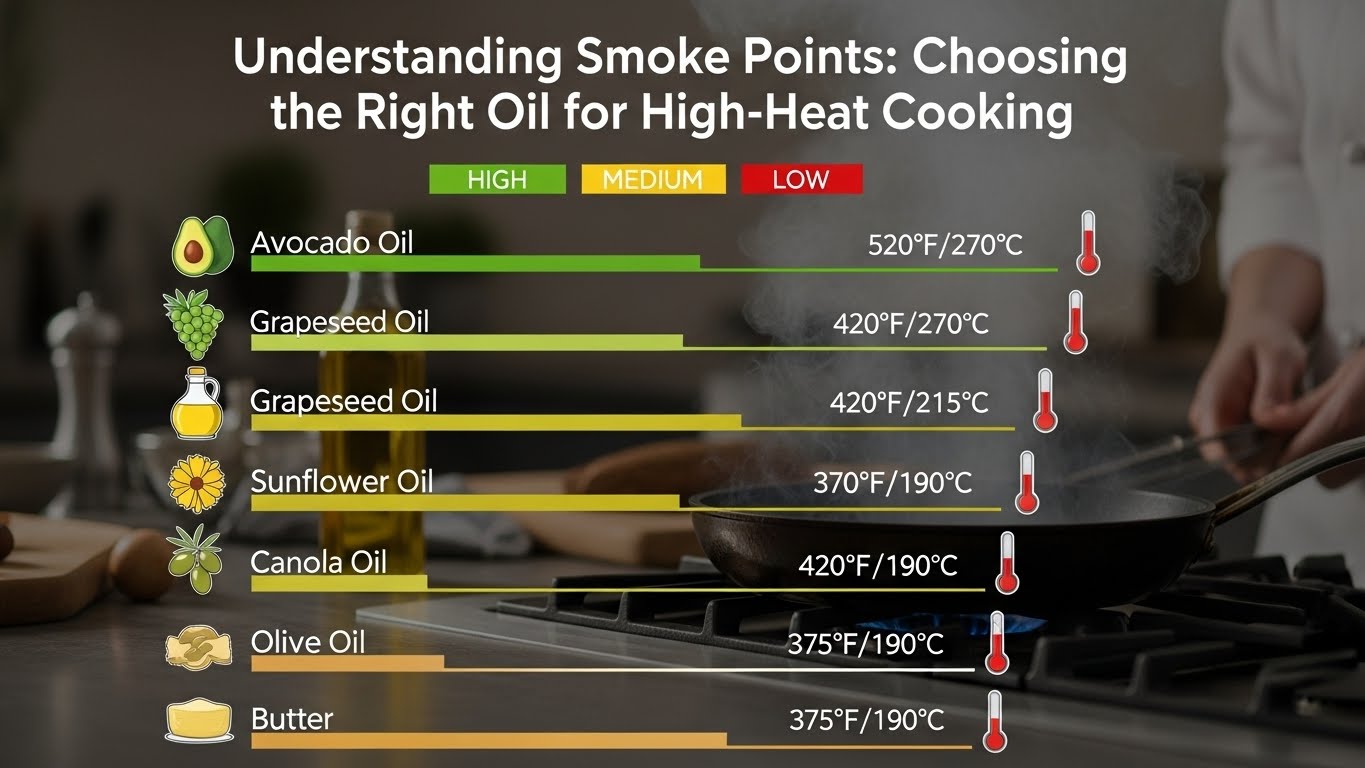
Avocado Oil: A versatile oil with one of the highest smoke points, ranging from 480°F (248°C) for refined avocado oil to about 375°F (191°C) for unrefined variants. Perfect for grilling and frying.
-
Canola Oil: With a smoke point of approximately 400°F (204°C), canola oil is suitable for frying and baking. Its neutral flavor makes it a favorite among home cooks.
-
Olive Oil: Extra virgin olive oil has a smoke point between 375°F and 410°F (191°C – 210°C), making it ideal for sautéing or drizzling over dishes. However, regular olive oil has a higher smoke point, up to 450°F (232°C).
-
Coconut Oil: Refined coconut oil possesses a smoke point near 450°F (232°C), suitable for baking, frying, and sautéing. Unrefined coconut oil, with a lower smoke point (around 350°F or 177°C), is ideal for medium-heat cooking.
-
Peanut Oil: This oil has a smoke point of about 450°F (232°C), making it perfect for frying and stir-frying due to its nutty flavor.
-
Grapeseed Oil: With a smoke point around 420°F (216°C), grapeseed oil works well for high-heat applications like frying or as a base for salad dressings.
-
Sunflower Oil: Refined sunflower oil has a high smoke point of approximately 440°F (227°C), making it a great choice for frying and baking.
-
Sesame Oil: Toasted sesame oil has a lower smoke point (about 350°F or 177°C), suitable for dressing or low-heat cooking. However, refined sesame oil can reach up to 450°F (232°C).
- Soybean Oil: Normally used in processed foods, soybean oil has a smoke point around 450°F (232°C), making it suitable for high-heat cooking methods.
Choosing the Right Oil for Your Cooking Method
-
Frying: For deep frying, oils with a smoke point above 375°F (190°C) are ideal. Common choices include peanut oil and refined avocado oil due to their high heat tolerance and flavor profiles.
-
Sautéing: Use oils with smoke points around 375°F (190°C) or higher, such as extra virgin olive oil or canola oil. They provide good flavor and perform well in the pan.
-
Roasting: When roasting vegetables or meats at high temperatures, opt for oils like grapeseed oil or sunflower oil, which can withstand the heat without degrading.
-
Dressing and Marinades: For cold applications, lower smoke point oils like extra virgin olive oil or sesame oil can add robust flavors without the risk of smoking.
- Baking: Most oils can be used for baking, but choosing oils with